2025
When it comes to the roll call of our literary greats, I don’t think Keith Waterhouse gets his due. His reputation as a Fleet Street giant was well earned at the typewriter and the bottle, but his contribution to the disposable world of newsprint and its drinking culture does cloud the memory, at least a little, of his longer-lasting published works.
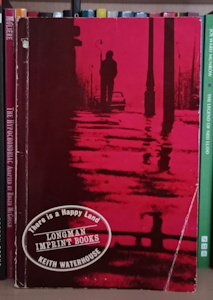
So even though I love his magnificent Billy Liar, I still didn’t approach There is a Happy Land, his 1957 novel, with heart a-flutter. But having plucked it from the shelf in a Hebden Bridge junk shop, it took just half a page to realise I’d found a fictional evocation of the pre-war North that was right up my cobbled street.
Seen through the eyes of a ten-year-old at the back end of the 1930s, it conjures up the moment-by-moment pleasure, pain and puzzlement of emerging into a world run by adults. It may be set 30 years before I was born, but the head-spinning swirl of hilarity, confusion and stomach-clenching dread is exactly as I remember it from my own pre-teen days, and there are few writers to match Keith Waterhouse when it comes to capturing the way kids talk.
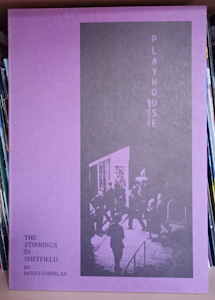
Three decades after the events of There is a Happy Land, the Sheffield Playhouse was reaching the end of its life. The beloved rep theatre was about to be replaced by the modernist Crucible’s gleaming thrust stage, but its dynamic final decade was documented by local critic Denys Corrigan and published in a handsome volume called The Stirrings in Sheffield – the name of the Playhouse’s most popular production of the 1960s.
For me, the book was a wonderful surprise find on eBay. Printed on luxurious paper clutched tightly between stiff purple boards, it features plenty of photographs, a comprehensive list of productions, and Corrigan’s personal account of the shows that made up each season throughout those last ten years. A large office block now stands on the Playhouse’s old site, but this book is a beautiful relic from the moment on the cusp of the 1970s when the creaky old theatre and its ghosts were about to be swept away.
Having spent much of this year – and every year – wallowing in the past, I also took the opportunity to read something a little more current, selecting the tightly controlled rage of Jenny Lindsay’s Hounded to bring me up to date. As a poet and arts promoter based in Scotland, Lindsay is well placed to document the poisonous bullying experienced by women in various walks of life – many in the arts – when they stepped up to defend women’s sex-based rights. Hounded does a great job of detailing the harms, both personal and professional, that resulted.
Far more than just a collection of heinous incidents, Hounded builds a case against a prevailing orthodoxy that has privileged the nebulous over the material – ‘gender’ over ‘sex’ – while refusing to allow the consequences for women to be debated or discussed. Even as I was reading the book, however, it felt as though the wider world might be waking up to what’s been happening in the shadows, and hopefully Lindsay’s subjects will turn out not to have suffered in vain.
—
2024
A few years ago in this very column, I jokingly cursed my apparent inability to extend my literary horizons much beyond my immediate surroundings. Year after year, my best reads turn out to be books that delve in some detail into the places where I’ve lived – mostly Sheffield (the city I bestrode as a child, teen and twenty-something), and Liverpool (where I now lay my hat).
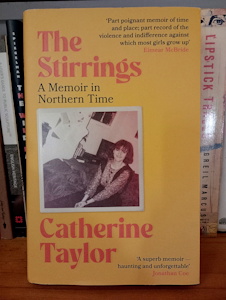
This year is no different. Beginning with the city of my youth, Catherine Taylor’s memoir The Stirrings pulls the Sheffield I remember into sharp focus. Her early years track my own so closely – temporally and geographically that is, rather than in the details of her family life – that it’s hard to imagine we didn’t wander past each other on West Street or Glossop Road numerous times.
I remember, for instance, the bookshop her family owned, which was a cosy paper-lined retreat in Broomhill, one of the city’s most picturesque suburbs – beloved by Betjeman no less. I remember too the shadow the so-called ‘Yorkshire Ripper’ cast over the north of England during the 1970s, though as a lad tumbling about the schoolyard in my scuffed Clarks Commandos, I rarely remember thinking of this character as much more than a cartoonish bogeyman. As a girl and a young woman, Taylor’s recollection of his malign influence pulled me up sharp and turned my nostalgic reverie into something guiltier, even tainted. Therein lies much of this evocative book’s haunting power.
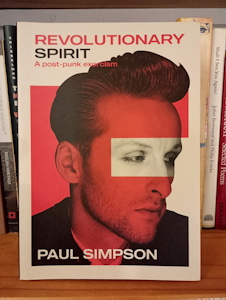
As for Liverpool, which in February will have been my home for three decades, I now feel I’ve lived here even longer thanks to the Baudelairean evocations of Paul Simpson’s superb Revolutionary Spirit – not just a memoir, but a ‘post-punk exorcism’ according to the cover.
Simpson was a co-founder of The Teardrop Explodes, sidekick of the Bunnymen, flatmate of Courtney Love (see Dave Haslam’s Searching for Love for more on that story), buddy of Bill Drummond and so on, all characters who come alive in this book. It may not have escaped your notice, however, that all these people found true fame and fortune at various points in their careers – some even had so much cash, all they could think to do with it was set it on fire – whereas Simpson has been less troubled by what we might think of as ‘traditional’ pop success.
But in a book that takes self-deprecation to hilarious heights while simultaneously portraying a man who spent much of the 1970s and 80s immersed in poverty-stricken self-mythologisation, it becomes clear that for some, the pursuit of a pure artistic vision demands the detonation of conventional ‘success’ just as it’s about to arrive. It may not be done on purpose, but it’s an inescapable theme of this book.
Fortunately, while there may not have been a torrent of money waiting at the end of Simpson’s artistic rainbow, there is genuine pop gold – seek out his decades-long music project, The Wild Swans, for proof – and there is this magnificent book.
And if I’ve made it sound like a relentless tale of artistic struggle and financial woe, I’m sorry. Believe me, it’s also very fucking funny. For instance, Simpson’s story about playing the Royal Festival Hall organ for Julian Cope is comic writing at its best. As almost always, he ends up kind of coming a cropper – but in so many ways, he’s an utter hero too.
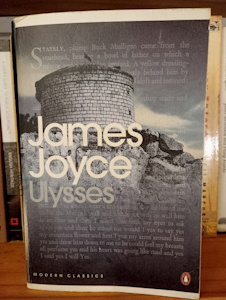
And finally… 40 years after I read its first few pages during a fit of sixth-form pretension, 2024 was the year I properly devoured Ulysses. Back in the early 80s, it was obvious I didn’t have time between necking Thunderbird, and, well, actual necking, to finish the thing. But middle-age is different, and this year I had both the time and the literary inclination.
It wasn’t the breeziest of experiences, that’s for sure, but I promise it was well worth the wait. Not least because although it was definitely a ‘best read’, I can now also relax in the knowledge that I really don’t have to read it again.
—
2023
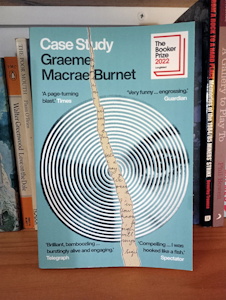
During the summer, I spent a few idyllic days at the Borders Book Festival in Melrose, Scotland. Remember those ‘Phew! What a Scorcher!’ weeks back in June? As I boiled beneath tropical sunshine on the festival’s first afternoon, I fell under the spell of Scottish author Graeme Macrae Burnet who was discussing his 2021 novel, Case Study. Presented as a genuine case from the files of a charismatic 1960s psychotherapist called Collins Braithwaite, the book is an ingenious and dryly hilarious probing of a young woman’s mind as she investigates the hold that Braithwaite may have had over her sister – who is, alas, now dead.
According to Burnet, some readers have assumed that Case Study is fact, not fiction, based on the scholarly manner in which he presents his made-up material. This assertion was borne out there and then at the festival by the whisperings of the couple behind me; they had read the novel and still seemed to think it was an account of events that really happened. And that, I swear, is the truth.
While my favourite fiction of the year may have been falsehood play-acting as fact, my other two best reads were both grounded firmly in reality – as perceived by their authors, at least, which as we’ll see, doesn’t mean their pronouncements aren’t fiercely contested.
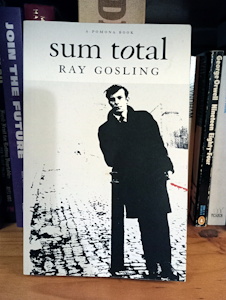
First up is an unexpected charity shop find, a memoir called Sum Total by the sadly-departed journalist and broadcaster Ray Gosling. First published in 1962 when he was a precocious young writer, the book is Beat Generation literature filtered through the grime, grease and fag smoke of the English midlands. It may sometimes be a bit too Kerouac for its own good, but it is, nevertheless, an evocative conjuring of pre-Beatles teen Britain – a world in which rejecting a pre-destined working-class future was like attempting to turn back the tides. Although maybe it still is.
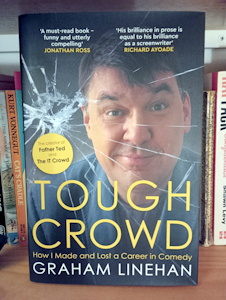
The other memorable memoir I read this year is made of much more up-to-the-minute stuff. I didn’t even wait for publication before shelling out my cash for Graham Linehan’s Tough Crowd (subtitled ‘How I Made and Lost a Career in Comedy’), preferring to pre-order a signed copy direct to my door rather than trying to hunt it down in shops that aren’t always overkeen to put it on display.
It isn’t the first portion of the book that makes booksellers nervous, of course. In elegant, often very funny prose, Linehan talks us through his early career as a music writer through to his emergence as a master of the studio sitcom, most famously the mighty Father Ted. But then comes the incendiary bit as he describes the dramatic downfall that followed his outspoken defence of women’s rights and belief in the reality of biological sex. Such was the success he’d achieved as a screenwriter that his mauling at the hands of a brutal industry is all the more painful to dissect.
Others will think differently, I know that. They will believe he has brought the last few years of opprobrium on himself. But the book’s final third is a fierce and funny counterblast to that judgement. And such is the force of his argument, I suspect that not too long from now, at least some of those performers, producers and TV commissioners who have disowned him will be deleting past tweets, revising their opinions, and pretending they always thought Linehan was right.
—
2022
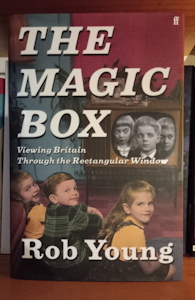
If your primal TV memories involve teak veneer, a static-charged screen and a gazillion spattered cathode rays, Rob Young’s The Magic Box is the book to make your ageing valves hum again. As a survey of certain strands of post-war British television (and some cinema too), it’s a fact-packed feast of folk horror trippiness, kitchen sink grittiness, time-twisting nostalgia, and puppet shows made from cotton reels and sadness.
It’s not a slim volume, so do give yourself a little time if you’re tackling it cover to cover – and don’t forget to add a generous streaming allowance for good measure. Not sure what that is? It’s to cover the fact that Young’s text is so stuffed with references to long-gone programmes – many of which would have been on way after you went to bed – that barely a page goes by without the urge to put down the book and jump onto YouTube instead.
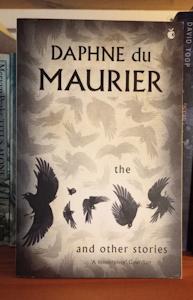
Daphne du Maurier’s The Apple Tree is exactly the kind of short story that could have become one of the BBC’s famous Christmas ghost tales back in the mid-1970s, although I can’t find a record of a TV version having been made (though my research amounts to little more than a quick skim through Rob Young’s index). It’s a strange and mesmerising chiller about a widower whose curious post-wife contentment gradually begins to decompose, and it’s my favourite pick from du Maurier’s wonderful collection, The Birds and Other Stories.
I haven’t read much memorable fiction this year, but at their best, du Maurier’s shorts are like unwelcome visitors. They hang around long after you try to wave them goodbye.
—
2021
The quickest way to stir up Sheffield these days is to suggest that Lea & Perrins Worcestershire Sauce might be nicer than Henderson’s Relish, the locally-made and much-mythologised brown condiment of choice. But half a century ago, it was the shape of the brand new Crucible Theatre’s innovative thrust stage that was prompting punch-ups in the local papers – a controversy that split the city more decisively than United and Wednesday have ever managed.
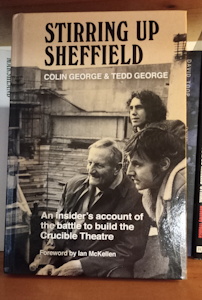
This improbably polarised dispute is at the heart of Stirring Up Sheffield, an adventure story of sorts telling the tale of the Crucible’s genesis, construction and early life. Written by founding artistic director, Colin George, and completed by his son, Tedd George, it’s both densely detailed and rivetingly told – a must for anyone who holds this special venue close to their hearts.
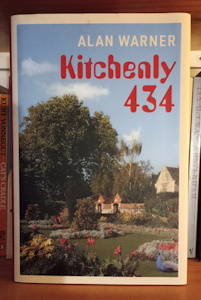
Microscopic attention to detail also defines my other favourite read of the year – Alan Warner’s wonderfully odd novel, Kitchenly 434. This bittersweet and quietly funny book somehow manages to be both a butler’s memoir and an evocation of the dying days of prog rock. It’s like The Remains of the Day as if it was set in the late 1970s – a world of stately homes, unfeasible wealth and unswerving loyalty, but one in which the music of Gary Numan is not so much a period detail as a synth-driven existential threat.
—
2020
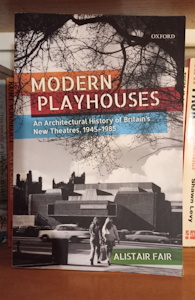
My last social event before lockdown was a theatre trip, but sadly, nights spent in darkened auditoriums have been lacking since then. Reading Modern Playhouses by Alistair Fair made up for it a bit though. As an architectural history of Britain’s post-war theatres, it’s less concerned with those who trod the boards than the stuff those boards were made of, but if you’ve ever wondered how so many concrete cultural temples came to be built in the plazas and precincts of our post-war world, Modern Playhouses has all the backstage buzz.
I’m not acquainted with its author, Alistair Fair – OK, we share half a surname – but my other two choices are both by people I know. I usually try and avoid reviewing friends’ work, but I’m afraid nothing else this year entangled my soul quite like these two whisperingly wonderful books.
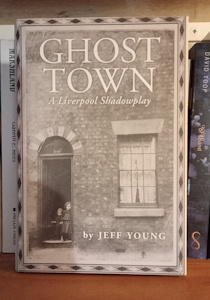
Ghost Town by Jeff Young is billed as ‘a Liverpool shadowplay’, which hints at the overlapping layers of Mersey-scented memory that pass across its pages. Few cities weave myth, magic and melancholy into their self-told stories quite like Liverpool, and Young transforms this entrenched civic tendency into a memoir fit for a misty port city of the mind.
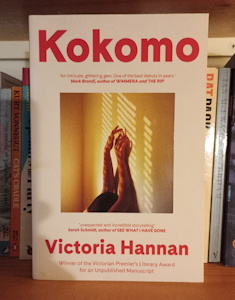
Like Young’s book, Kokomo by Victoria Hannan springs from some deep thinking about family relationships, but whereas Ghost Town flickers like a magic lantern, Hannan’s debut novel is a piece of sharply focused contemporary fiction in which love and obligation come face to face.
It tells the story of a young Australian woman suddenly plucked from her busy London life and deposited back home in Melbourne, and as it relates this experience, its narrative feels sparky enough. But when it suddenly twists to reveal a previously shadowed character, that’s when the power of Hannan’s storytelling really hits home and Kokomo leaves its imprint on your heart.
—
2019
One of the wonderful things about books is the way they open up access to words from every corner of the globe. So, this year, why did my three favourite reads transport me no further than the times and places in which I grew up?
No, don’t answer that. I’m afraid it says rather a lot about me.
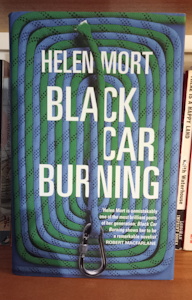
In her debut novel, Black Car Burning, the poet Helen Mort gives voice to locations and landmarks around Sheffield and its knobbled Peak District hinterland – a slice of National Park that falls just within and without the city’s south western border. In so doing, she connects the city not to Yorkshire’s Compo-in-a-tin-bath mythology – those dales and moors of the North and West Ridings with which I’ve never felt Sheffield has much in common – but to the craggy edges and millstone grit of Derbyshire’s crumpled northern verge.
It’s this proximity to crags and crevices that has helped Sheffield become the UK’s climbing capital, and Mort’s novel is set within this lithe fleece-clad community. But it’s far more than simply a novel about climbing. It’s a deeply internalised tale about love and yearning, trauma and loss, and springs from a place where the whispered thoughts of both people and places intersect in unsettling fashion. The fact that there’s also a powerful Liverpool connection – meaning the novel gets a tight fingerhold on both the cities I’ve called home – just adds to my fear that my mental horizon terminates a few feet in front of my face.
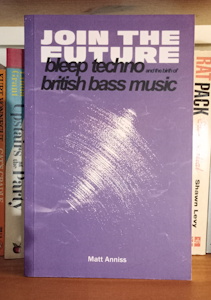
If part of the pleasure I derived from Black Car Burning can be traced back to its recognition of Sheffield/Derbyshire cross-border bonding, Join the Future by Matt Anniss could be thought of as Yorkshire’s revenge. Subtitled Bleep Techno and the Birth of British Bass Music, Anniss focuses on the distinctive bottom-heavy brand of dance music that emerged from the county – primarily Sheffield, Leeds and Bradford – around the turn of the 1990s, and which went on to exert a powerful influence on a variety of homegrown hypnotic grooves.
My interest in this topic is more than academic. Arriving back in Sheffield in 1989 after three years away, I plugged into this local sound and did my best to keep up to speed with the rapidly evolving scene – a network that connected clubs, dancers, DJs and promoters across South and West Yorkshire, and that spewed out a series of gut-churning, bass-hefty, bleep-driven cuts by the likes of Unique 3, Forgemasters, Ital Rockers, Nightmares on Wax, Sweet Exorcist and LFO.
When music’s evolution is at its most hectic – as it was there and then – its tangle of rivalries and influences becomes almost impossible to unpick, but Anniss does a great job of giving voice to those involved and helping to make sure the enduring reverberations of this undersung era are forever fixed in paper and ink.
Join the Future is clad in a vibrant purple cover, and those who know their A side from their B side will understand why. Many of the initial wave of Yorkshire techno tracks were released on a fresh-faced Sheffield label called Warp Records – an imprint whose 12-inch singles came in an arresting purple sleeve the same colour as the book. That sleeve, along with Warp’s retro-futurist sci-fi logo, was created by a young Sheffield design studio called The Designers Republic, an outfit that was changing the way in which musicians from the city and beyond represented themselves on the shelf.
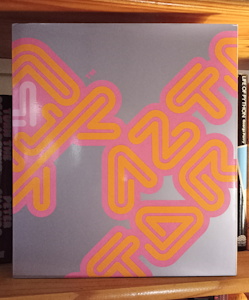
Thirty years on, both Warp Records and The Designers Republic are still thriving, with the latter celebrating three highly influential decades by finally unleashing its long-promised masterwork, A-Z of The Designers Republic™.
Less of a favourite read and more of a favourite look, this unfeasibly beautiful publication is easily the most precious object I held in my hands this year. Not that I’ve ever kept it aloft for long, as the sheer weight of its dayglo inks, metallic finishes and thick, silky paper ensure that an idle flick through its pages soon leaves the biceps twitching and arms feeling heavy as lead.
But no matter. With the aid of an improvised plinth made of cushions, I’ve spent countless happy hours gazing at its collection of era-defining record sleeves, posters, flyers and other images, and ingesting the informative, evocative prose written by the Republic’s supremo, Ian Anderson.
Time was when I would seek out and buy music I’d never actually heard simply because it was clothed in Designers Republic artwork, and this mighty book is a glorious reminder of those days. But more than that, it gives me the perfect answer should anyone question my claim that Sheffield has produced some of the greatest pop culture artefacts ever made.
Not necessarily by virtue of its content, though that’s persuasive enough. Nope. If anyone dares dispute my assertion, I’ll just smash its 500 fearsome pages in their face.
—
2018
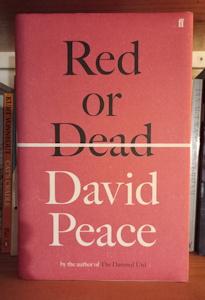
The best book I read this year was an intimidating prospect. In the manner of famed Liverpool FC hard man Tommy Smith, Red or Dead by David Peace stared me out for four years, taunting me from the shelf on which it had sat ever since I bought it from the author himself at a book signing. But in January this year I took it down, cracked its spine, and set off on a startling football journey.
In summary, it’s a 720-page novel about the football manager Bill Shankly and his relationship with Liverpool – the team and the city. But it’s no languid dribble through a novelised life. This book is relentless in its repetition, terrifying in its singular poetic vision. Inherent in every line is the mud-caked drudgery of football in the 60s and 70s, a world of teak-sided tellies and fag smoke and beer. It was the repetition that I feared would break me well before the end, but instead it became a mesmerising incantation, a devastating evocation of the most bloody-minded football genius the British game has ever seen.
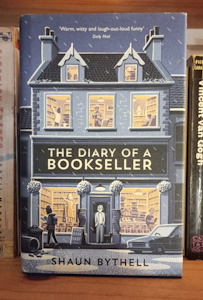
After finally putting that beast to bed, I was ready for a breezier read. The Diary of a Bookseller by Shaun Bythell whisks the reader up to Wigtown in Scotland’s bottom-left corner – the country’s National Book Town, no less. It’s a place I know well thanks to fondly-remembered family holidays, so I’m familiar with Bythell’s shop – simply called The Book Shop – on Wigtown’s unfeasibly wide main street.
If making money is your thing, Bythell’s book will quickly convince you that opening a second-hand bookshop is not a passion you should pursue. But in spite of the bleak realities at its core – Amazon throws an enveloping shadow over his ever-struggling enterprise – his diarised year is full of charm, humour and resigned-to-the-future commercial stoicism. Not to mention a customer-baiting grumpiness that makes his shop sound like a Harry Enfield sketch.
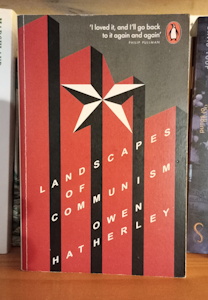
A summer break in Berlin prompted the purchase of my third selection. No, not a Cold War spy thriller or some classic Christopher Isherwood. Instead, it was my fascination with the concrete precincts and post-war blocks of the former East Berlin that led to me picking up Landscapes of Communism by Owen Hatherley.
From the long, wide boulevards known as ‘magistrales’ – designed expressly for glorious parades and displays of military hardware – to workers’ clubs, culture palaces and palatial metro systems, Hatherley journeys through the towns and cities that were once the real-life template for a future utopia, the physical relics that remain now the Eastern Bloc is no more.
Combining an academic’s attention to detail with a journalist’s turn of phrase, Hatherley is the perfect guide on what is, as far as most people are probably concerned, a pretty perverse sightseeing tour. However, having now read about the concrete vistas of Kolobrzeg, Kharkiv and Katowice, I realise that Berlin’s Alexanderplatz is entry-level stuff in comparison. So I’m already saving up for next summer’s trip to Tbilisi. Wife allowing.
—
2016
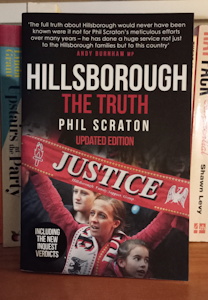
For a book that was first published in 1999, Phil Scraton’s masterful Hillsborough: the Truth could hardly have been more relevant this year.
This is a book that coolly and skilfully walks readers through the bright Sheffield sunshine of 15 April 1989 and into the pitch black hell that followed – a hell constructed from concrete and steel, from 96 dead, from provocation and lies, and from the deadening silence of the cover-up. It’s the book that first laid bare the process of ‘review and alteration’ that police statements underwent following the Hillsborough disaster, a revelation that should have rocked the establishment but which the authorities managed to sidestep until the publication of the Hillsborough Independent Panel Report in 2012 (of which Scraton was the primary author). And now, having been updated yet again following the Hillsborough Inquests, it’s the book that tells the full story, from tragedy and injustice through to the fans’ ultimate vindication.
Scraton has devoted many years to researching the disaster, fuelled no doubt by a fearsome urge to right the wrongs but also, surely, facing the ever-present possibility that those wielding power would win. If there’s any pleasure at all to be derived from reading this important yet heartbreaking book, it’s that they didn’t win. Hopefully, 2017 will be the year when accountability finally kicks in.
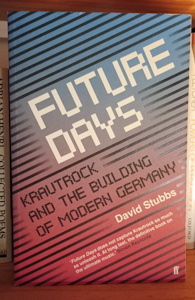
Of the other books I read this year, my two favourites were both about music. In Future Days: Krautrock and the Building of Modern Germany, David Stubbs tells the story of the wildly inventive strain of rock music that put down roots in Germany around the mid-1960s and flowered over the subsequent two decades. One of these bands, called Kraftwerk, went on to become one of the most influential groups in the history of post-war pop but, for the most part, the others were denied their rightful place in pop’s narrative thanks to the prejudices and shrunken horizons of the British and American music press.
Post-war Germany was a nation in which the underlings of Hitler’s regime – the local administrators and party members – were still in positions of power as judges, teachers, lecturers and the like. For the country’s youth, enraged by the older generation’s sudden amnesia about the recent past, it was a time to hit back against this old order and create new art forms that were distinctly German but that gave no quarter to the national tendencies that had motivated the Nazis’ rise to power.
In the field of music, this meant rejecting Anglo-American conventions and starting rock music afresh, experimenting with structures, technologies and methods but without becoming academic or dull. Stubbs does a great job of tying these big themes and personal histories together, not to mention unifying bands and artists that could be stylistically very different. After all, ‘krautrock’ was never a genre, nor was it even a particularly satisfactory name (having originated as a British music press taunt), but in Stubbs’ hands, it becomes abundantly clear that whatever you choose to call it, this was some of the most exhilaratingly creative music ever made.
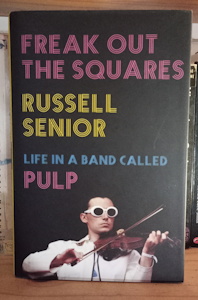
Of course, when it comes to giving pop music a quirky creative twist, Germany doesn’t have a monopoly. Russell Senior’s book Freak Out the Squares: Life in a Band Called Pulp shows how a stubborn Sheffield band emerged to give the world a space-pop-disco makeover during the often dispiritingly rockist Britpop years.
Senior was a member of Pulp from the back-rooms-of-pubs days of 1983 until 1997 when he turned his back on the band. The group may have been at the peak of its powers when he returned to the ranks of the common people but, with its career-defining album Different Class behind hit, he sensed that the truly inspired years were probably in the past. However, having been something of a creative director within the group, often acting as self-appointed guardian of its drip-dry nylon aesthetic, he was far from being just another also-ran band member with a view from the sidelines. I get the sense that while Jarvis Cocker may have been the actual face of Pulp, Senior feels that he himself might have been the keeper of its day-glo soul.
I always suspected that the cool and inscrutable Senior would be able to tell an interesting tale about Pulp’s protracted rags-to-riches rise, and this book confirms that he is an elegant storyteller with an eye for the less obvious details. Pulp were never puritans, but in no way is this a regular pills ‘n’ powders rock biography. Instead, we cut back and forth between the band’s winding road to stardom and the triumphant reunion gigs of 2011, acting as witnesses to a story that’s more Silk Cut and Babycham than rock and roll babylon. But one that’s no less enjoyable for all that.
—
2015
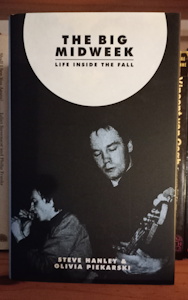
The Big Midweek: Life Inside The Fall – Steve Hanley & Olivia Piekarski
There have been memoirs about hidden lives in closed worlds before – such as the Freemasons, the Foreign Legion or MI5 – but compared to The Big Midweek: Life Inside The Fall, those books look about as revelatory as one of Katie Price’s many autobiographies. Less a rock band, more a perennially touring fiefdom, The Fall have been constructing brittle-but-brilliant music for almost four decades. However, despite their famously high turnover of musicians – over 40 at the last count – the band’s members have been pretty tight-lipped about what it’s really like to work with singer/despot Mark E. Smith. Now though, thanks to Steve Hanley – the man who played bass in The Fall for 17 years – and co-writer Olivia Piekarski, we get to peep behind the band’s battered Transit doors. The result is one of the best music books I’ve ever read. It’s a hair-curling yet deeply thoughtful look at life in Smith’s grip, and despite all the eye-popping tales it contains, it made me wish with all my heart that I’d had chance to be sneered at, sworn at and humiliated by the most rancorous musical genius of them all.
*
The World That Never Was: A True Story of Dreamers, Schemers, Anarchists & Secret Agents – Alex Butterworth
If there’s one thing everybody knows about the causes of the First World War, it’s that Archduke Franz Ferdinand was assassinated in Sarajevo. His killer was a Serbian nationalist, but the technique – a murderous ‘spectacular’ designed to grab headlines in an age of mass printed media – was common to any number of groups, conspiracies and counter-conspiracies that had flourished throughout Europe since the Paris Commune. In The World That Never Was: A True Story of Dreamers, Schemers, Anarchists & Secret Agents, Alex Butterworth makes it clear that though we now think of Marxism as having been the dominant force on the revolutionary left, it was once just one strand among a knotted web of anarchists, socialists, communists and other ideologues hoping to fight back against exploitation and oppression. Add in the provocations and deliberate confusions created by Europe’s intelligence services – particularly by the shadow-shifting Peter Rachkovsky, head of the Tsar’s Okhrana secret service – and you have an endlessly fascinating tale of subversion, reprisal and ingenious misdirection. It takes some skill to untangle these sometime-phantom narrative strands, but Butterworth’s book – published in 2010, but enjoyed by me this year – tells the best kind of history: it’s all true, but it’s still a thriller at heart.
*
Brew Britannia: The Strange Rebirth of British Beer – Jessica Boak & Ray Bailey
When I first started going to pubs, deciding which beer to buy was the least of my worries. Being of a fresh-faced persuasion, my under-age attempts to procure ale involved sweaty palms, nervous glances and the liberal use of tippy-toes just to see over the bar. By the time I caught the landlord’s eye, a strangulated utterance of the word “bitter” was all I could manage – with the only alternatives being lager or Guinness. Pity then today’s under-age drinker who must go through the same emotional wringer and then decide what to choose from the dazzling array of porters, IPAs, lambics, weissbiers, saisons, altbiers, dubbels, tripels… not to mention extra-potent treats like imperial stouts and double IPAs. Well before I began making my first forays into the world of the public house, it seemed that British beer was doomed to fizzy homogenisation. However, in the wonderful Brew Britannia: The Strange Rebirth of British Beer, Jessica Boak and Ray Bailey tell the heart-warming story of how that doom-laden journey towards beery blandness eventually became a fantastic voyage into our current hop-scented golden age.
—
2014
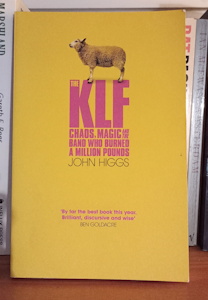
The KLF: Chaos, Magic and the Band that Burned a Million Pounds – John Higgs
Of all the pop-rave crossover acts of the early 90s, only one could trace their influences back through interstellar leylines, through post-punk Liverpool, through discordianism and synchronicity and into the heart of the Kennedy assassination. And it wasn’t D:Ream. This book, which reaches way beyond conventional band biography, could have turned into a convoluted tale, but John Higgs is the perfect guide: chatty, enthusiastic, both sceptical and a believer. When you’ve read this, maybe you’ll finally understand why the KLF was a band with money to burn.
*
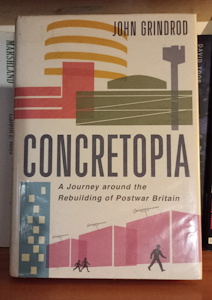
Concretopia: A Journey Round the Rebuilding of Postwar Britain – John Grindrod
Growing up in the 70s, I made certain assumptions about the way of the world. There would always be three television channels; flared trousers were eternal; and one day, everyone would live somewhere that looked like Sheffield’s Park Hill flats. In this highly readable survey of postwar planning and architecture, full of personal reflection and detail, John Grindrod surveys the visions, ideals, successes and failures that made Britain look the way it does – much of which explains why I and many others turned out to be wrong.
—
These pieces were originally published as part of the annual Best Reads feature on the website Northern Soul.